Home Blog Page 10

Harford Mutual Insurance Group Names Two New Officers

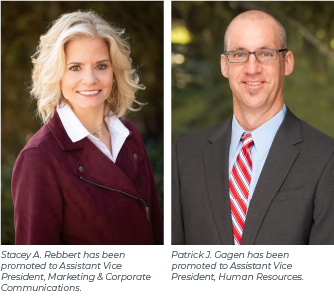
Harford Mutual Insurance Group announced that its Board of Directors has approved the promotions of two employees to officer level as Assistant Vice Presidents.

Stacey A. Rebbert has been promoted to Assistant Vice President, Marketing & Corporate Communications. A marketing professional for 35 years, Rebbert joined Harford Mutual in 2013 as Marketing Manager and was promoted to Director of Marketing & Corporate Communications in 2018. Rebbert developed the strategies behind the company’s brand management, created the company’s crisis communication plan, and leads her team in the execution of all digital marketing, advertising, employee engagement, public relations, community relations, and corporate communications.

Rebbert holds a bachelor’s degree in mass communications from Towson University and a master’s degree in contemporary communications from Notre Dame of Maryland University. She has completed the Harford Leadership Academy and the Towson University Professional Leadership Program for Women. Rebbert served as a board member of the Insurance Marketing Communication Association and currently serves on the board of the Rockfield Manor Foundation. She is also a mentor for Towson University’s Outstanding Young Women Leaders Program.

Patrick J. Gagen, SPHR/SHRM-SCP, has been promoted to Assistant Vice President, Human Resources. Gagen joined Harford Mutual in 2015 as Director of Human Resources. He’s been at the center of several strategic initiatives, including new talent acquisition, leadership perpetuation planning, and employee retention. As Assistant Vice President, Gagen will continue to oversee benefits administration, compensation management, training and professional development programs, and the implementation of internal policies and procedures.

Gagen has over 18 years of human resources operations experience. He earned his bachelor’s degree in business administration and master’s in human resource development from Towson University. Gagen is a member of the Society for Human Resource Management (SHRM) and Chesapeake Human Resource Association (CHRA). He has also achieved his Lean Green Belt Certification, SHRM Senior Certified Professional (SHRM-SCP), and Senior Professional in Human Resources (SPHR) designations.

Learn more about the Assistant Vice Presidents and Harford Mutual Insurance Group at https://www.harfordmutual.com/.

Liberty Mutual Insurance Announces Key Executive Leadership Appointments

Liberty Mutual Insurance Chairman and Chief Executive Officer David Long announced key executive leadership appointments that will provide more creative, complete solutions for the company’s customers and partners and create better opportunities to address their evolving needs.

“Today’s announcement marks an important chapter for the company. These new executive leadership appointments better position us now and in the future as a leading global insurer and will help us capitalize on opportunities across our businesses,” said Long. “I continue to be extremely proud of the commitment shown by our employees and leadership to accelerate innovation, prioritize digital-first and data-driven results and harness our full resources to provide excellent service to our customers around the world.”

Effective July 1, new executive leadership appointments include:

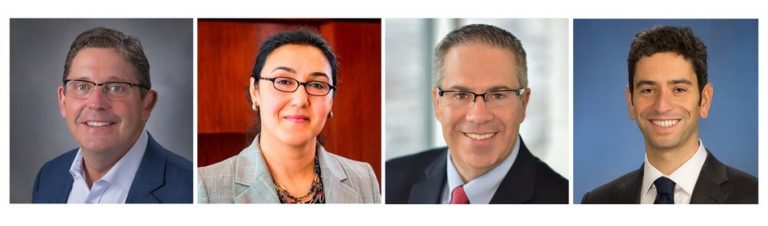
  • Tim Sweeney is named President, Liberty Mutual. He will be responsible for overseeing the company’s three business units (Global Risk Solutions, Global Retail Markets, Liberty Mutual Investments) and will report to Long. Sweeney was previously President, Global Retail Markets.
  • Neeti Bhalla Johnson is named President, Global Risk Solutions. She will be responsible for overseeing the company’s commercial and specialty insurance business unit and will report to Sweeney. Bhalla Johnson was previously President and Chief Investment Officer, Liberty Mutual Investments.
  • Jim MacPhee is named President, Global Retail Markets. He will be responsible for overseeing the company’s retail insurance business unit and will report to Sweeney. MacPhee was previously President and Chief Operating Officer, Global Retail Markets – U.S.
  • Vlad Barbalat is named President and Chief Investment Officer, Liberty Mutual Investments. He will be responsible for overseeing the company’s investments business unit and will report to Sweeney. Barbalat was previously Executive Managing Director and Co-Head of Strategy & Asset Allocation, Liberty Mutual Investments.
Liberty Mutual Insurance Announces Key Executive Leadership Appointments
Dennis Langwell

President, Global Risk Solutions Dennis Langwell Announces Retirement

The company’s President, Global Risk Solutions Dennis Langwell also announced he will retire at the end of 2021. Langwell held multiple leadership roles during his notable 26-year career at Liberty Mutual and will serve in an advisory capacity as Vice Chairman, Liberty Mutual Insurance Operations until the end of the year, reporting to Long.

“I’d like to thank Dennis for the extraordinary contributions he’s made at the company and in the industry over his remarkable career,” said Long. “Not only did Dennis lead tremendous growth for Liberty Mutual during numerous roles and across multiple functions, he’s also been instrumental in our Diversity, Equity and Inclusion efforts as a champion for our Employee Resource Groups. I am personally grateful for his counsel and friendship and we wish him the very best.”

“It’s been a true honor to be part of Liberty Mutual for over 25 years and I’m very proud of the accomplishments we’ve achieved together,” said Langwell. “I highly respect the extensive business and leadership experience that Neeti brings to the executive team and Global Risk Solutions. Liberty Mutual continues to be a global leader in the industry and has a great future ahead.”

For more information, visit www.libertymutualinsurance.com.

Climate Change-Influenced Hurricane Season Could Threaten an Estimated 8 Million Homes With Storm Surge in 2021 According to CoreLogic

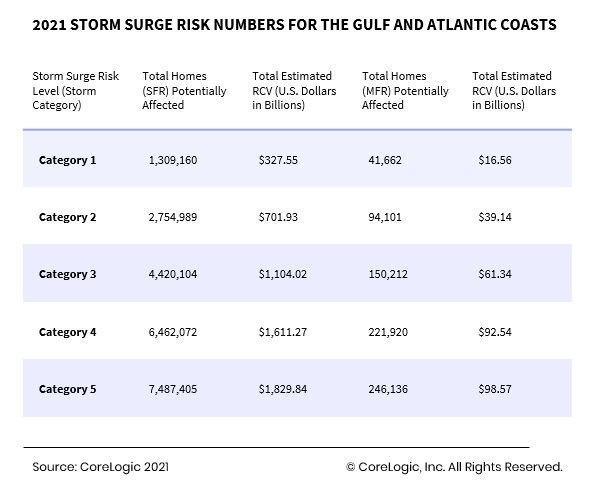
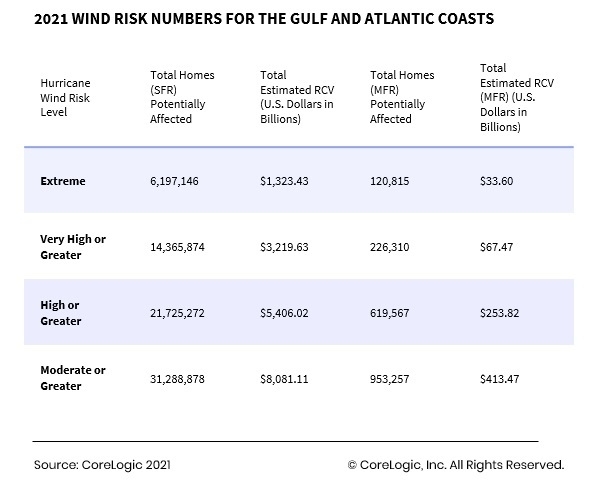
IRVINE, Calif. — CoreLogic® a leading global property information, analytics and data-enabled solutions provider, released its 2021 Hurricane Report, providing analysis of single- and multifamily residences along the Gulf and Atlantic coasts and revealing nearly 8 million homes with more than $1.9 trillion in combined reconstruction cost value (RCV) are at risk of storm surge. This year’s report also examines hurricane wind and reveals more than 31 million homes with nearly $8.5 trillion in combined RCV have moderate or extreme risk exposure to hurricane winds.

With a record high of 30 named storms in the 2020 Atlantic hurricane season and the larger looming impact of climate change, CoreLogic is urging insurers and lenders to prepare for an unpredictable season by shifting the focus from loss adjudication to loss prevention and avoidance. To help mitigate the effects of hurricanes and other natural disasters, it is important to support community resilience goals and understand the risk faced by those impacted.

“To provide a 360-degree view of the impact of climate change, we took a look at the U.S. housing economy after a hurricane strikes and noticed a significant spike in mortgage delinquency rates and loss in housing inventory,” said Frank Nothaft, Chief Economist at CoreLogic. “Communities most affected by natural and financial catastrophe include those with already-high delinquency rates such as in Lake Charles, Louisiana, as reflected in the pre- and post-Hurricane Laura landfall rates.”
Climate Change-Influenced Hurricane Season Could Threaten an Estimated 8 Million Homes With Storm Surge in 2021 According to CoreLogic

Hurricanes, Climate Change and the Impact to Humans

Climate change is significantly affecting the characteristics of hurricanes in the basins that impact the U.S. An increase in frequency and severity of hurricanes with damaging wind, storm surge and flooding will result in the continuation of property losses and increased financial implications on the insurance industry. While wind damages are covered by standard homeowners insurance policies, flood insurance is not consistent. Adoption inside the Special Flood Hazard Areas (SFHA) designated by FEMA is strong, but it’s rarely purchased outside of those zones. In fact, CoreLogic studies have shown that up to 70% of the damages from flood to homes is uninsured.

This means many unsuspecting homeowners could be left with little-to-no protection in recovery from intensifying hurricane seasons. When lower income communities are hit with disaster, it can have long-lasting, compounding effects. Damaged homes, often unsuitable for habitation, may force communities into living situations with new, unplanned-for expenditures. Their place of work may be damaged, locking them out of earning income.

Storm Surge and Hurricane Wind Risk Data

CoreLogic evaluated the storm surge and hurricane wind risk levels for both single-family (SFR) and multifamily (MFR) residences along the Gulf and Atlantic coasts, from Texas up to Maine, for the 2021 hurricane season. Analysis includes the total estimated reconstruction cost value (RCV), which is calculated using the combined cost of construction materials as well as equipment and labor assuming total (100%) destruction of the property.
Climate Change-Influenced Hurricane Season Could Threaten an Estimated 8 Million Homes With Storm Surge in 2021 According to CoreLogic

Metro Implications

CoreLogic looked at the top 15 metropolitan areas with the greatest number of SFR and MFR homes at risk for storm surge and wind damage. The review of the risk counts tells the story of varying risk profiles in the communities we reside in:

  • The New York, New York metro area has the greatest risk with 890,430 homes with over $356 billion RCV at risk for storm surge and over 3.8M homes with over $1.6 trillion RCV at risk for hurricane wind.
  • The Miami, Florida metro area that includes Miami, Ft. Lauderdale, and West Palm Beach follows the New York Metro area with more than 767,741 homes with over $156 billion RCV at risk for storm surge and over 2M homes with over $422 billion RCV at risk for hurricane wind.
  • At a state level, Florida, Louisiana and New York have the greatest number of homes at risk of storm surge and hurricane winds.

“Resilience can be thought of as our ability to recover quickly after a shock, and because we cannot alter the frequency and severity of natural catastrophes, the continuity of our financial system relies upon the expectation of resilient communities,” said Tom Larsen, Principal, Insurance Solutions at CoreLogic. “The current focus is on anticipating what challenges to resilience will be confronting us in the future – a future where we expect more damaging events.”

About CoreLogic

CoreLogic (NYSE: CLGX), the leading provider of property insights and solutions, promotes a healthy housing market and thriving communities. Through its enhanced property data solutions, services and technologies, CoreLogic enables real estate professionals, financial institutions, insurance carriers, government agencies and other housing market participants to help millions of people find, buy and protect their homes. For more information, please visit www.corelogic.com.

CORELOGIC, and the CoreLogic logo are trademarks of CoreLogic, Inc. and/or its subsidiaries. All other trademarks are the property of their respective owners.

 

Ameriprise Financial Earns 2021 Digital Wealth Management Impact Innovation Award for Digital Client Engagement from the Aite Group

0

MINNEAPOLIS — Ameriprise Financial, a pioneer and longstanding leader in financial planning, today announced it has won a Digital Wealth Management Impact Innovation Award for Digital Client Engagement from the Aite Group, a global research and advisory firm. Aite Group’s annual award program honors wealth management firms that are advancing and leading the industry with innovative products, capabilities, or levels of automation. A panel of experts recognized Ameriprise for its Confident Retirement® Virtual Experience, which received high marks for innovation and customer experience in the survey’s evaluation.

The Ameriprise Financial Confident Retirement® Virtual Experience is an interactive online journey that connects investors with a team of remote, licensed Ameriprise Advisor Center financial advisors who help them build wealth, track their progress, and protect their finances over time. The experience caters to the preferences of investors who value virtual, flexible and affordable personalized advice to support their financial goals on the path to building wealth. All Ameriprise clients, including those who work with dedicated teams from the Ameriprise Advisor Center, can interact with their online goals from any device at any time and receive ongoing education and guidance from their advisors.

“We developed the Confident Retirement Virtual Experience as another way to bring our powerful advice capabilities to more investors across the country, and we’re honored that it has been recognized as best-in-class,” said Jamie Wanless, Senior Vice President of the Ameriprise Advisor Center. “Our continuous investments in technology enable us to deliver comprehensive and personalized advice through this compelling experience to each and every Ameriprise client, and help investors in every generation take control of their finances.”

The Confident Retirement Virtual Experience is guided by the firm’s proprietary Confident Retirement approach, which has helped millions of Ameriprise clients feel more confident about their financial future. With the expertise of their advisors and interactive online features, clients can gain a stronger understanding of their finances and work toward achieving their goals.

To try the Ameriprise Financial Confident Retirement Virtual Experience, visit https://www.ameriprise.com/wellness/, call the Ameriprise Advisor Center at 866-601-6480 or click here to make an appointment with a licensed Ameriprise financial advisor.

For additional information about the Aite Group and its Digital Wealth Management Impact Innovation Awards, please contact pr@aitegroup.com.

EMC’s Angela Noble Named to “Elite Women of the Year” List by Insurance Business America

0

DES MOINES — Angela Noble, vice president – innovation at EMC Insurance Companies (EMC), has been named one of Insurance Business America’s “Elite Women of the Year” for 2021.

“Angela is a strategic leader and has been instrumental in engaging the entire organization through our industry-leading innovation journey,” said EMC Chief People Officer Beth Nigut. “She is so deserving of this recognition.”

Celebrating excellence in the insurance industry, this annual awards program was created to recognize the trailblazing efforts and leadership of women in insurance across the country.

In her role, Angela Noble leads corporate initiatives to differentiate EMC in the marketplace through innovation, collaborates with leadership on innovation-driven strategy, and manages partnerships with accelerators and start-up incubators. Noble joined EMC in 2018 as innovation manager and previously served as a business consultant with Nationwide.

For more information, visit emcins.com.

ACORD Digital Customer Experience Study for U.S. Personal Lines Highlights Value of Effective and Engaging Insurance Websites

PEARL RIVER, NY ACORD, the global standards-setting body for the insurance industry, released its Digital Customer Experience Study: US Personal Lines 2021. This most recent version of the ongoing study examined more than 1,250 carriers, InsurTechs, and aggregators to assess the industry’s overall performance and identify the key strategies and capabilities for delivering a successful digital customer experience.

“Delivering a superior digital customer experience is a critical imperative for insurers,” said ACORD President & CEO Bill Pieroni. “The digitally mediated consumer habits developed during the pandemic are likely to persist, particularly as they reflect a previously existing trend toward digitization of insurance processes. It has become increasingly clear that delivering a quality digital customer experience is key for continued success.”

ACORD screened over 1,250 websites, assessing candidate sites through a unique, persona-driven approach built around a comprehensive portfolio of demographic and psychographic factors, providing a more detailed and insurance-specific view than typical customer experience surveys. Each of the sites was scored on Engagement (providing a compelling and “entertaining” customer experience) and Enablement (ability to satisfy customer needs).

Among the findings of the study were:

  • S. personal lines websites are better at Engagement (with an average score of 70.8) than Enablement (58.9), highlighting a need to improve website functionality.
  • Aggregators – which were added to the pool of websites surveyed for the first time in this installment of the study – ranked relatively low compared to carriers’ sites.
  • While the industry as a whole has improved in delivering an effective digital customer experience, the gap between the top and bottom performers has widened.

“While we have seen many websites improve relative to previous iterations of the study, the laggards have fallen even further behind,” said Pieroni. “As in almost all other facets of the insurance industry, investing in digital capabilities – and adopting a new digital mindset – has become a prerequisite for insurers trying to stay relevant and competitive.”

More information on the ACORD Digital Customer Experience Study series is available at www.acord.org/research.

Triple-I Update: Hurricane Season to Have ‘Above-Average’ Activity

JOHNS, Fla., — An updated 2021 Atlantic hurricane season forecast released today by the Tropical Meteorology Project in the Department of Atmospheric Science at Colorado State University (CSU) maintains its outlook for an “above-average” level of tropical cyclone activity.

Led by Phil Klotzbach, PhD, also a non-resident scholar at the Insurance Information Institute (Triple-I), the CSU forecast team released its initial 2021 outlook on April 8.

In its updated 2021 forecast, CSU now anticipates 18 named storms, rather than 17, while keeping its estimate for the season at eight hurricanes and four major hurricanes.  Major hurricanes are defined as those with wind speeds reaching Category 3, 4 or 5 on the Saffir-Simpson Wind Scale. Tropical Storm Ana became the first named storm of 2021 when it formed in late May in the north Atlantic.

“History proves that if you live on or near the Gulf or Atlantic Coasts, you are in harm’s way,” said Sean Kevelighan, CEO, Triple-I. “Coastal states from Maine to Texas are vulnerable to the impacts of hurricanes. All it takes is one storm to make it an active season for you and your family so now is the time to prepare.”

“Homeowners and business owners should review their policies with an insurance professional to make sure they have the right types, and amounts, of insurance to protect their properties from damage caused by either wind or water. That also means exploring whether they need flood coverage since flood-caused damage is not covered under standard homeowners, renters, or business insurance policies. In addition, homeowners should take steps to make their residences more resilient to windstorms and torrential rain by installing roof tie-downs and a good drainage system,” Kevelighan added.

Flood policies are offered through FEMA’s National Flood Insurance Program (NFIP) and numerous private insurers.

The Atlantic hurricane season officially started on June 1 and continues through Nov. 30. A typical season has 14 named storms, seven hurricanes and three major hurricanes, based on 30-year seasonal averages from 1991 through 2020. The installation of a wind-rated garage door and storm shutters also boost a home’s resilience to a hurricane.

Fourteen of the 30 named storms that occurred in 2020 were hurricanes. Seven of the 14 hurricanes became major hurricanes, tying the record set in 2005. A record-setting 11 named storms made landfall in 2020 in the continental U.S., including six hurricanes.

Private-passenger vehicles damaged or destroyed by either wind or flooding are covered under the optional comprehensive portion of an auto insurance policy.

Through its Resilience Accelerator and other educational materials, the Triple-I offers numerous hurricane season preparedness tips. These include:

  • Developing a photo/video inventory of your possessions and your home’s exterior, which will ease the claims-filing process
  • Preparing a hurricane emergency kit with a minimum two-week supply of essential items, such as drinking water, non-perishable food and COVID-19 safety items (face coverings, hand sanitizer)
  • Creating an evacuation plan well before the first storm warnings are issued.

CSU predicts 2021’s hurricane activity will be about 120 percent of the average season. By comparison, 2020’s hurricane activity was about 145 percent of the average season. Moreover, the CSU forecast indicates there is a 69 percent chance of a major hurricane making landfall in the continental U.S. this year. This includes a 45 percent chance for the U.S. East Coast, including the Florida peninsula (the average for the last century is 31 percent); and a 44 percent chance for the Gulf Coast from the Florida Panhandle westward to Brownsville, Texas (the average for the last century is 30 percent).

“We do not anticipate El Niño conditions this summer or fall in the tropical Pacific,” said Klotzbach. “When El Niño occurs, upper-level westerly winds tend to tear apart hurricanes as they are trying to develop and intensify in the Atlantic basin. Additionally, the subtropical Atlantic is much warmer than normal right now, which typically leads to a warming of the tropical Atlantic by the peak of hurricane season beginning in mid-August, fueling tropical cyclone activity.”

Keystone Expands in Great Lakes Region with The Cornerstone Agency of Illinois

0

NORTHUMBERLAND, Pa. — Keystone Insurers Group (Keystone) continues its expansion in the Great Lakes region by bringing The Cornerstone Agency (Cornerstone) of Tampiko, Illinois into its community.

“Cornerstone is a well-respected, growing agency known for its service in the agricultural market. Greg, Luke, and Tyler are excited to continue growing with Keystone by expanding their access to core carrier relationships and the intellectual capital they’ll gain from other agents in our community,” explained Matt Fink, state vice president for Illinois.

The agency principals stated: “Our agency team is anxious to move ahead with Keystone and our fellow agencies. We have looked at Keystone for some time and are more than impressed with the organization, their approach to aligning with quality agencies, and positioning them for the future.”

About The Cornerstone Agency– For 30 years, The Cornerstone Agency has been a leading farm and crop/hail agency in Illinois. President and CEO Greg Sandrock became one of the leaders in the IIA of Illinois and the National Big I and is very well respected within the industry. Through the years, the agency shifted their focus from crop/hail to P&C and began growing their book for home/auto and small business insurance. Greg’s sons, Tyler and Luke, have joined the agency within the last few years. They also have become leaders within the Young Agency IIA of Illinois, with Luke being awarded the IIA of IL Young Agency of the Year in 2018. For more, visit https://www.2cornerstone.com.

About Keystone Insurers Group (Keystone): Keystone started in 1983 when four independent insurance agencies teamed up to pool their experience and expertise. This small group believed that agencies could be stronger and more successful if they linked arms – a passion and spirit that continues. Growing to almost 300 independent agency partners in 17 states, Keystone provides its agents with a community of like-minded agencies, industry expertise and access to specialized products for their clients. Keystone is ranked number four on Insurance Journal’s 2020 list of Top 20 Property/Casualty Agency Partnerships. For more information, go to www.keystoneinsgrp.com.

Insurers Led Through 2020’s Disruptions, Triple-I CEO Says

0

ARLINGTON, Va. — U.S. insurers showed in 2020 they could fulfill their traditional role as economic first responders even amid a global pandemic, record-setting natural disasters, and civil disorders, according to Sean Kevelighan, CEO, Insurance Information Institute (Triple-I).

“The insurance industry applied forward-thinking solutions to take care of its customers, communities and employees during the COVID-19 crisis,” Kevelighan stated, in a presentation to the Casualty Actuarial Society’s (CAS) Virtual Spring Meeting.

Insurers provided $14 billion in premium relief to vehicle owners last year as miles driven decreased, raised $280 million for charitable causes, and retained a national workforce which stood at more than 2.8 million throughout 2020, with a number of insurers pledging no layoffs during the pandemic, Triple-I analyses and research have found.

“2020 proved how this industry can lead through disruption. Insurers kept their promises and paid claims—even during a global pandemic,” Kevelighan said, when discussing how 2020’s economic headwinds reduced the insurance industry’s net income after taxes and slowed premium growth when compared to 2019.

U.S. insurers paid out $67 billion in 2020 due to natural disasters, the result of 13 hurricanes, five of the six largest wildfires in California’s history, and a derecho which caused significant damage in Iowa. Moreover, 2020’s civil disorders caused insured losses comparable to 1992’s Los Angeles riots, the costliest in U.S. history.

“Insured losses caused by natural disasters are increasing at an alarming rate,” Kevelighan continued, a week before the June 1 start of the 2021 Atlantic hurricane season. “They have grown by nearly 700 percent since the 1980s. History has proven that virtually every community along the Gulf and East Coasts have faced the wrath of what is a hurricane’s catastrophic damage. And now with even more Americans living in harm’s way, it is even more critical for consumers and communities to take action.”

The Triple-I’s Resilience Accelerator initiative is committed to driving behavioral change to help people and communities better manage risk and become more resilient, Kevelighan added. Kevelighan also cited the Triple-I’s successful launch last year of its Future of American Insurance & Reinsurance (FAIR) public affairs campaign, which served as a source of education surrounding pivotal industry activity.

Kevelighan, the Triple-I’s CEO since August 2016, began in November 2020 a one-year term as an appointed member of the Casualty Actuarial Society’s board of directors.

Property Insurers Can Gain Critical Insights on Roof Risk With Verisk Data

0

JERSEY CITY, N.J. — Determining the age and replacement cost of a roof, seeing its condition evolve, and understanding the potential for storm damage are becoming increasingly critical for underwriting property insurance and ensuring customers have the coverage they need. But obtaining all that information can be a significant challenge. To help address this need, Verisk (Nasdaq: VRSK), a leading global data analytics provider, has launched Roof Underwriting Reports, combining artificial intelligence and leading analytics to provide insurers with robust views of every roof they insure.

“A roof is one of the most important parts of a structure to consider during underwriting and one of the most difficult on which to obtain updated information due to the hidden and evolving risk,” said Neil Spector, president of ISO at Verisk. “Our new Roof Underwriting Reports can help insurers quickly gain insights to refine risk selection and segmentation, automate underwriting and better serve their customers.”

Growing roof claims highlight need for enhanced underwriting analytics

The new Roof Underwriting Reports are being introduced as many insurers are seeing the number of damaged roofs in the United States continue to grow. More than 2.3 million roof claims were processed in 2020 by Xactware, a Verisk business. That was about a 25 percent increase in the number of roof claims compared to 2019.

The new Roof Underwriting Reports draw on a wide range of robust and unique data, providing insights into several factors insurers may consider during underwriting, including:

  • Age and condition — While many insurers traditionally rely on in-person inspections or the year of construction—that data may be difficult to obtain and imprecise. Verisk combines aerial imagery analytics, permits data, and an array of other data elements to provide updated information on the age, material, geometry and changing conditions of a roof.
  • Replacement costs — As they have over the last year, the costs of materials and labor can vary widely over time and in different areas. Verisk draws on updated pricing surveys and actual claims to deliver reliable replacement cost estimates for roofs, down to their individual components.
  • Hail and wind damage — Hail damage can go unnoticed for years, and a claim may be filed with an insurer who wasn’t covering the building when the damage occurred. Verisk’s imagery and weather data enable insurers to identify roofs that have been affected by past storms.

The Roof Underwriting Report for Homeowners also features information on tree coverage, advisory loss costs and claims insights on neighboring residences.

Learn more about Verisk’s extensive roof insights at verisk.com/uwroofinsights.