
Home Blog Page 5

Builders Mutual CEO Reviews First Year

Builders Mutual, one of the Mid-Atlantic and Southeast’s leading writers of commercial insurance for the construction industry, recognizes the one-year anniversary of CEO Mike Gerber, as the company looks back on how they effectively managed through volatility and set a strategic foundation for sustained success.

Gerber joined Builders Mutual 25 years ago and has led and/or worked with nearly every department, gaining a genuine appreciation for the value contributed by each role. “Because we planned so well for the CEO transition, the first year seemed fairly predictable. I was completely aligned with the strategy, so it wasn’t so much a learning experience as much as an evolution,” says Gerber. “But when I look back and realize some of the challenges we ultimately faced and how much we truly accomplished—it was certainly not business as usual.”

Shortly after Gerber took on the CEO role, the great resignation hit, and Builders Mutual felt the impact. While working to effectively handle this extraordinary market condition, the company was also building a new leadership team with an emphasis on cohesiveness and diversity, so there was a top-down focus on retaining existing talent and recruiting new teammates in innovative ways. According to Gerber, “While we’ve made strides in our history to diversify our workforce, we haven’t really evolved to where we need to be. So, I wanted to send a message about how important it is to me that we enhance our workforce diversity and promote career opportunities—not just jobs.”

A huge IT overhaul is another focus area for Gerber and team in the efforts to establish a foundation for future success. Although cutting-edge technology is not a market differentiator for Builders Mutual, it does enable the business to optimize day-to-day functions, so leadership wanted to ensure every business function helps drive the process. “It’s not an upgrade for upgrade’s sake,” Gerber explains, “but rather a future-focused strategy to build our capacity to better run operations, grow business, and improve data.”

Because Builders Mutual focuses solely on insurance for construction, being the industry experts is part of their DNA. And living up to that moniker takes consistency, persistence, and a desire to always improve. During Gerber’s first year as CEO, the leadership team renewed this commitment through its long-term strategic plan, putting actions in place so every employee has the tools they need to be an expert in their distinct job function.

“Regardless of a person’s role in the company, we’ve all got to give evidence that we are experts,” Gerber says. “It’s how we differentiate ourselves in the marketplace.”

Builders Mutual certainly had the opportunity to prove itself over the past two years. When the pandemic hit, the company was able to deliver industry-specific solutions to the extraordinary challenges. They quickly pulled together Covid-specific job-site training, provided solutions to keep essential workers safe, equipped businesses to weather the financial storms, and ensured that their agents, partners, and policyholders knew how valued they are. Then, as challenges continued to arise over the past 12 months, Gerber and his leadership team faced each of them with the confidence of, well, experts.
72% of Young Homeowners Expect Climate Change-Related Extreme Weather to Damage Their Homes in Next 30 Years

A new survey from insurtech leader Policygenius finds widespread concern about climate change-related extreme weather, especially among young homeowners.

The survey found that nearly three quarters (72%) of young insured homeowners (age 18 to 34) expect their homes to be damaged by extreme weather in the next 30 years (describing it as very or somewhat likely), compared to nearly half (45%) of all adult homeowners. Nearly two in three (64%) young homeowners believe it likely they will choose or be forced to move due to climate change-related extreme weather in the next 30 years, compared to 27% of all homeowners.

This disparity increases for young parents: 77% of young homeowners who have children under 18 expect to move in the next 30 years due to climate change-related extreme weather, compared to 25% of total non-parents and 15% of total parents with children older than 18.

“As natural disasters continue to worsen due to climate change, it’s understandable if younger homeowners are wary of the future. In 2021, there were 20 climate disasters in the U.S. that each caused over $1 billion in damage. This included the unprecedented cold wave in Texas that left many homes without power, and Colorado’s Marshall Fire which destroyed an entire community,” Pat Howard, a licensed property and casualty insurance expert at Policygenius, said. “But there are multiple things you can do to protect your family and financial future, including checking to see if you have enough home or flood insurance coverage.”

The Policygenius 2022 Climate Change Survey also found that:

  • Many homeowners have already experienced damage due to extreme weather. Nearly one-third (31%) of insured homeowners have already sustained home damage from a hurricane, tornado, wildfire, flood, or other extreme weather event, while nearly half (48%) of homeowners know another homeowner who has.
  • Many Americans may be underinsured. One-third (33%) of homeowners either don’t believe they have enough insurance for a full rebuild of their homes, or aren’t sure if they do. Just 21% of homeowners have purchased flood insurance, even though flood damage isn’t covered by most home insurance policies.
  • Homeowners in the South are most likely to have seen home damage from extreme weather. Around 37% have suffered damage to their home due to extreme weather, versus 31% of all homeowners. And more than half of Southern homeowners (54%) know someone whose home has been damaged by extreme weather, versus 48% of all homeowners.
  • However, homeowners in the South aren’t more likely to move. Over half (52%) of homeowners in the South think it likely their homes will be damaged by climate change-related extreme weather in the next 30 years. However, under one-third (31%) of Southern homeowners said they’re likely to move in the next 30 years due to climate change, comparable with rates in the West (32%) and the Northeast (28%).

Policygenius commissioned YouGov to poll 1,348 insured American homeowners 18 or older. YouGov conducted this survey online from May 13 to May 17, 2022. The figures have been weighted and are representative of all U.S. adults (aged 18+). You can see additional data in the full report here.

EMC Announced as 2022 Winner of Technology Impact Award

0

EMC Insurance Companies was named a 2022 winner of the Insurance Technology Impact Awards by Aite-Novarica Group, in the category of Data Initiatives. This was the 11th annual Insurance Technology Impact Awards, which recognizes insurers for their projects and programs that delivered real business impact through technology.

“It is such an honor to receive this award from Aite-Novarica Group for our ongoing enterprise data modernization efforts,” said Laks Krishnamoorthy, vice president – enterprise data management. “This work requires a high-level of commitment and collaboration from our teams, and I could not be prouder to work alongside them.”

Aite-Novarica Group is an advisory firm providing mission-critical insights on technology, regulations, strategy and operations to hundreds of banks, insurers, payments providers and investment firms. The group plans to host a series of moderated panel discussions with representatives from all winning organizations in the months of July and August.

“The Impact Awards are designed to help recognize the ways insurers are using technology to better understand and manage risk, to sell policies more quickly and effectively, and to streamline processes and improve operational efficiency,” said Harry Huberty, head of CIO research at Aite-Novarica Group. “This year’s submissions were among the most impressive I have ever seen, and I’ve heard from a number of voters that they were extremely impressed by the quality of this year’s competition.”

FCCI Insurance Group Launches New Claim Handling Video

0

FCCI Insurance Group launched its second video in a series of six – “FCCI Claim Handling.” In this newest release, a policyholder, agent and claim adjuster tell a story of how FCCI Insurance Group was accessible, responsive and followed through after a catastrophic loss. When Bama Utilities of Fultondale, Alabama was hit by a tornado, FCCI Insurance Group was there for them in their time of need.

Expect four more videos this summer with a focus on the Business Owner experience, FCCI’s Risk Control expertise, FCCI’s partnership-driven TeamWorksSM approach, and recruiting top talent. These videos will enable current and prospective agents and policyholders to learn more about the Company, its values, and why they should partner with FCCI for their commercial insurance needs.

VIDEO LINK: FCCI Claim Handling Video

For more about FCCI’s prompt and fair claim handling, go to www.fcci-group.com/claims-services or call (800) 226-3224.

CoreLogic Report: Millions of Properties at Risk of Hurricane-Force Wind and Storm Surge Damage

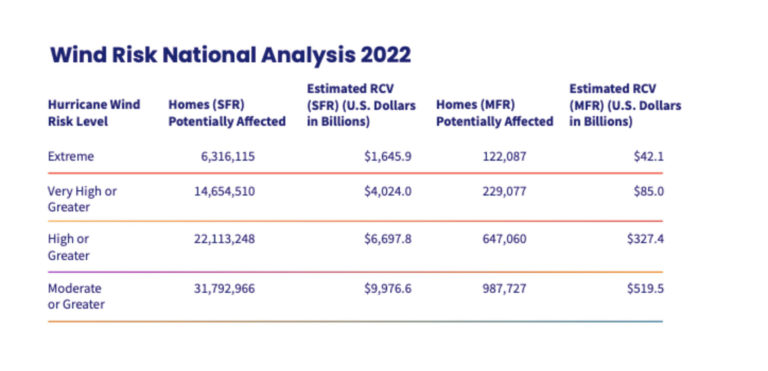
CoreLogic® released its 2022 Hurricane Report, which analyzes hurricane and storm surge and wind risk exposure for single-family residences (SFRs) and multifamily residences (MFRs) along the U.S. Gulf and Atlantic Coasts.

CoreLogic risk modeling data shows that nearly 7.8 million homes with more than $2.3 trillion in combined reconstruction cost value (RCV) are at risk of hurricane-related damages. The report also revealed nearly 33 million homes with nearly $10.5 trillion in combined RCV are at risk of hurricane-force wind damages. The National Oceanic Atmospheric Association (NOAA) forecasts an above-normal 2022 hurricane season with as many as 21 named storms and up to 10 hurricanes, three-to-six of which could be major hurricanes.

“This hurricane season could be particularly severe for the U.S. Gulf Coast due to warmer-than-average Atlantic Ocean temperatures, an ongoing La Niña, and a stronger than average loop current in the Gulf of Mexico,” said Dr. Daniel Betten, Chief Meteorologist at CoreLogic. “Although La Nina events typically occur once every three years, this fall will likely be the fifth La Nina event over the last seven years.”

Insurers play an important role in supporting community resilience by ensuring adequate home and flood insurance as hurricanes affect local communities well beyond the immediate damage aftermath. The storms take a toll on the U.S. housing economy with noticeable spikes in mortgage delinquency rates and loss in housing inventory. After Hurricane Ida made landfall in August 2021, 30-day mortgage delinquencies in Houma, LA, rose from 1% to 7%. The Houma economy had already been hurt in the early months of the pandemic by a drop in oil prices. With the additional strain of Hurricane Ida, home prices recovered slowly, and rents weakened as workers and families relocated to other areas.

A Closer Look at Hurricane Risk Data

CoreLogic evaluated the storm surge and hurricane wind risk levels for both SFRs and MFRs from Texas to Maine for the 2022 hurricane season. The data includes the total estimated RCV, which is calculated using the combined cost of construction materials, building equipment and labor, and assumes total 100% destruction of the property. It is worth nothing the extreme unlikelihood that all risk-prone properties will be impacted or that all homes will be 100% destroyed during a hurricane season. These figures provide a point of reference and do not indicate what will occur this season.

Metro Area and State Implications

CoreLogic examined the top 15 metropolitan areas and states with the greatest number of SFRs and MFRs at risk for storm surge and wind damage:

  • The New York City metro area has the greatest risk, with nearly 900,000 SFR and MFR homes with nearly $433 billion in RCV at risk of storm surge damage and more than four million SFR and MFR homes with more than $2.2 trillion in RCV at risk of wind damage.
  • The Miami metro area follows, with nearly 770,000 SFR and MFR homes with nearly $193 billion in RCV at risk of storm surge damage and more than two million SFR and MFR homes with more than $521 billion in RCV at risk of wind damage.
  • At a state level, Florida, Louisiana and New York have the greatest number of SFR and MFR homes at risk of storm surge damage with more than three million; nearly 911,000; and more than 600,000 homes at risk, respectively. Texas tops the list for hurricane wind risk with more than 8.8 million homes at risk.

CoreLogic Report: Millions of Properties at Risk of Hurricane-Force Wind and Storm Surge Damage

Property and Casualty Insurers Experience Underwriting Loss in 2021, But Remain Strong

0

Despite experiencing an underwriting loss, the property/casualty insurance industry ended 2021 strong and able to support policyholders, according to a report from Verisk (Nasdaq: VRSK), a leading global data analytics provider, and the American Property Casualty Insurance Association (APCIA).

In 2021, the insurance industry experienced a $3.8 billion net underwriting loss, after a $5.2 billion underwriting gain in 2020, as incurred losses and loss adjustment expenses grew 11.1% while earned premiums only grew 7.4%. The combined ratio deteriorated as well, to 99.6% after 98.6% in 2020.

The deterioration in underwriting results was driven by growth in non-catastrophe losses, especially for personal auto. The insured losses from catastrophes in 2021, including Hurricane Ida in September, remained significant, even though associated net incurred losses and loss adjustment expenses declined to $56.3 billion in 2021 from $61.4 billion in 2020.

The industry saw a slight increase in net income after taxes to $61.9 billion, from $60.3 billion a year prior, helped by growth in investment income and in realized capital gains. A combination of factors, including significant unrealized capital gains, propelled policyholders’ surplus to a new record of $1,032.5 billion. Insurers’ rate of return on average policyholders’ surplus, a measure of overall profitability, declined to 6.4% from 6.9% in 2020.

“Although insurers’ net earned premium increased 7.4% and surplus topped a trillion dollars, losses and loss adjustment expenses (LLAE) grew at an even faster rate to 11.1% in 2021, causing an underwriting loss for the year,” said Robert Gordon, senior vice president, policy, research & international for APCIA. “Insurers’ combined ratio increased to 99.6%, and investment yields dropped to their lowest level since at least 1960. Net non-catastrophe LLAE increased 17.1%, excluding development of LLAE reserves. Insurers’ surplus growth was driven in part by $109.2 billion in capital gains on investments, although some of those gains may have already significantly deteriorated with the strong headwinds in the bond and equity markets in early 2022. While the industry balance sheet is strong enough to meet the commitments to insureds, it is facing emerging challenges from the significant and increasing impact of catastrophic weather events, cyber risk and significant price and social inflation/lawsuit abuse.”

“Last year brought strong premium and surplus growth as the economy recovered from COVID-19,” said Neil Spector, president of underwriting solutions at Verisk. “Importantly, this capital cushion bolsters insurers’ ability to respond to future claims as well as looming uncertainties in capital markets, global political risks and record inflation. In these complicated times, access to accurate underwriting data and advanced analytics will help equip insurers with the tools they need to weather the storms facing them.”

Fourth Quarter Sees Continued Growth in Net Written Premiums

The industry’s net income fell to $19.7 billion in fourth-quarter 2021 from the record $25.1 billion in fourth-quarter 2021, and the annualized rate of return on average surplus fell to 7.9% from 11.3% a year prior. The 7.9% is close to the 30-year average of 7.8% for rates of return.

Net written premiums rose $13.8 billion, or 8.9%, compared to 2020. Net underwriting gains declined to $1.8 billion from $4.9 billion in fourth-quarter 2020, and the combined ratio deteriorated to 100.0% from 98.2% a year prior.

Read the full report from Verisk and APCIA.

Independent Agents, Brokers Continue Record Run Performance

For a fourth consecutive quarter, independent insurance agents and brokers have set yet another organic growth record. That and other high markers are revealed by the latest Reagan Consulting Growth & Profitability Survey (GPS), which measured first-quarter 2022 industry performance. Agents and brokers “are enjoying an incredible run,” observes Brian Deitz, president and partner of the firm.

At 9.3%, the first quarter’s “median organic growth is 50 basis points higher than the previous record of 8.8% set just last quarter,” Deitz says, and “25% of Q1 participants grew organically at 15.9% or higher.”

Profits are at record levels as well, Deitz notes. Contingent income for the quarter grew at 18% year over year, “an incredible increase that generally drops straight to the bottom line,” allowing agents and brokers to leverage cost structures and expand margins, he says.

But the most impressive statistic of the quarter was a 26.2 median “Rule of 20” score, the highest in the survey’s history by nearly 4.5 points. A proprietary Reagan metric, the Rule of 20 benchmarks an agency’s shareholder returns, measuring the combined impacts of organic growth and profitability on value creation. A score of 20 or better means a firm likely is generating shareholder returns of 15% to 17% under normal market conditions.

Performance of individual lines

As expected, commercial lines continued to outperform personal lines and group benefits in Q1 2022. With an 11.5% organic growth rate, commercial lines broke its previous record of 11.4%, set just the prior quarter. The organic growth rate of neither personal lines nor group benefits (4.2%) broke records, but at 4.3%, personal lines achieved its second-highest level.

Deitz characterizes the performance of group benefits as “middle-of-the road,” commenting that the benefits business isn’t “benefitting from a p-c-like rate environment.”

Will the industry’s record run end in 2022?

Signs of an impending slowdown are mounting ― instability in the bond market toward the end of Q1, a spike in inflation, a reduction in the gross domestic product, and ripples from the war in Ukraine. But “agents and brokers do not seem overly concerned,” Deitz notes. Q1 GPS participants are projecting 8.0% organic growth for the year and foresee 2022 as their most profitable year yet.

For further observations and commentary on the Q1 results, contact Brian Deitz at Reagan Consulting, 404.865.2593 or brian@ReaganConsulting.com

The National Alliance Releases New Course – Certified Environmental Strategist – To Teach the Management and Transfer of Environmental Exposures

The National Alliance for Insurance Education & Research today announced the release of the Certified Environmental Strategist (CeS) self-paced course. Created by Chris Bunbury, Environmental Strategist and President of Environmental Strategist, Inc. (ESI), the course educates insurance professionals on how to advise clients as they manage and transfer their environmental exposures.

The four-hour self-paced course developed with The National Alliance for insurance Education & Research is for professionals looking to expand their book of business into the environmental insurance marketplace. Due to factors that include regulatory enforcement, environmental claims are expected to increase by 15-20% annually. Businesses who remain unprepared for such exposures risk financial ruin and may leave management liable for the consequences. The CeS course helps insurance professionals navigate that with clients.

Paul Martin, Director of Academic Content and Curriculum Development, shared this about the new course: “This one-of-a-kind program builds new skills in identifying the environmental risks that every business faces. What you’ll learn will only deepen your ability to protect your clients.”

Participants of the CeS course can expect a robust learning experience that ensures successful execution of environmental strategy at an introductory level. The course includes an environmental insurance submission checklist, a training manual, a step-by-step plan for how to develop and execute an environmental management strategy, and a comprehensive environmental efficiency evaluation survey.

About Chris Bunbury: Chris Bunbury is an Environmental Strategist and President of Environmental Strategist, Inc. (ESI), located in LeLand, Michigan. He graduated from Michigan State University with a Bachelor of Science degree in Natural Resources. In 1988, he worked in the commercial property and casualty insurance industry as a retail commercial insurance producer. As the environmental insurance industry evolved, it was a natural transition for Chris to move into this evolving field.

About The National Alliance: The National Alliance for Insurance Education and Research, a registered 501(c)(3), is an insurance education provider, recognized throughout the industry as a preeminent resource for technical training, designations, and continuing education in risk management and insurance. Boasting over 150,000 program participants, the National Alliance has set the standard for industry education since its inception in 1969.

Insurance Professionals Provide Insights on State of the Industry, Employment Trends and Technology

0

Vertafore, the leader in modern insurance technology, today released its annual insurance workforce survey report, titled “The Insurance Agency Workforce: Evolving into the next normal.”

Based on responses from more than 1,300 insurance professionals, the report includes insights on how independent agencies and MGAs responded to the Great Resignation, what attracts individuals to the insurance industry, factors that can keep employees in seat and how workers feel their agency is responding to technology modernization.

Findings from Vertafore’s fifth annual report include:

  • One in five insurance professionals reported changing companies in 2021, and financial considerations such as salary and bonuses were key drivers.
  • In the face of staffing challenges, nearly 80% of agency owners and principals reported making changes to retain their employees, including increasing compensation, offering flexible schedules and adding remote work options.
  • As in previous years, most respondents (78%) would recommend a career in insurance. However, that number dipped by 7% compared to 2020.
  • Women made up more than 60% of all respondents but comprised less than 30% of those who identified as an owner or principal.
  • While three-quarters of survey-takers felt InsurTech has had a positive impact on their agency in the past two years, more than half also said their agency could do a better job staying up-to-date with tech advances.
  • Insurance professionals want more time in their day to work with clients and identified automation and client digital engagement tools as the two most significant modernization trends for agency growth.

Survey responses show that the insurance industry is populated with people who are committed to their clients and community. While insurance was not immune to the Great Resignation, many agencies have been proactive about making changes to keep their talent. And insurance professionals are optimistic about technology advancements, but also feel their agencies have room to improve.

Download the 2022 report, “The Insurance Agency Workforce: Evolving into the next normal,” to see all findings.

Learn more about Vertafore at vertafore.com.

NAIC Membership Adopts Framework To Address Long-Term Care Insurance Rate Approvals

0

On April 8, during the Spring National Meeting in Kansas City, Missouri, the National Association of Insurance Commissioners’ members accepted the Long-Term Care Insurance (LTCI) Multistate Actuarial (MSA) Review Framework. The MSA Framework provides for a more consistent state-based approach when evaluating LTCI rate increase requests by insurers. Key objectives of the Framework are to educate and advise states on the appropriateness of actuarially based rates for policyholders’ benefits, narrowing rate review practices and reducing inequities among policyholders.

The MSA Framework describes the operational and actuarial details of how an MSA team will conduct a rate filing review and capture its analysis and recommendations in a written rate advisory report. The voluntary MSA review process laid out in the Framework facilitates greater coordination and information sharing, leverages collective LTCI actuarial expertise, and aims to improve the timeliness of rate decisions.

“The Long-Term Care Insurance Task Force has diligently led on its key goal of developing an MSA process to support, assist, and aid insurance departments in this challenging market. It is critical that consumers have long-term care policies that are offered from solvent carriers. I want to especially commend Virginia Commissioner Scott White and Colorado Commissioner Michael Conway for their leadership and thank the many other state insurance regulators that contributed to the MSA Framework,” said NAIC President and Director of the Idaho Department of Insurance Dean L. Cameron.

“The MSA Framework is a monumental step forward for the NAIC, and I anticipate continued improvements in the states’ capabilities and timeliness of rate increase considerations. While much work remains to be done, I am optimistic our state-based solution will further help states balance consumer protections and insurer solvency,” said Virginia Insurance Commissioner Scott White, chair of the Long-Term Care Insurance (EX) Task Force.

The Long-Term Care Insurance (EX) Task Force commenced its work in May 2019. An Ad Hoc Drafting Group, consisting of representatives from Colorado, Connecticut, Minnesota, Nebraska, Texas, Virginia, and Washington, commenced its drafting work in May 2020.

Moving forward, the LTCI Multistate Rate Review Subgroup, chaired by Colorado Insurance Commissioner Michael Conway, will focus on implementing the Framework, which is expected to be fully operational by September 2022. The Subgroup will continue efforts to improve the functionality of the MSA review process through feedback from state insurance departments and insurers in 2022 and beyond.